24/7 Water Response

Emergency Water Damage Restoration & Repairs

Extraction, structural drying, and the water-related repairs that follow for commercial buildings, sequenced around operating hours so occupied areas stay usable where the scope allows. Calls are answered 24/7 — AIOS coordinates the trades the loss needs, with timing set by the location, the conditions on site and trade availability, and documented moisture readings shared as drying progresses.
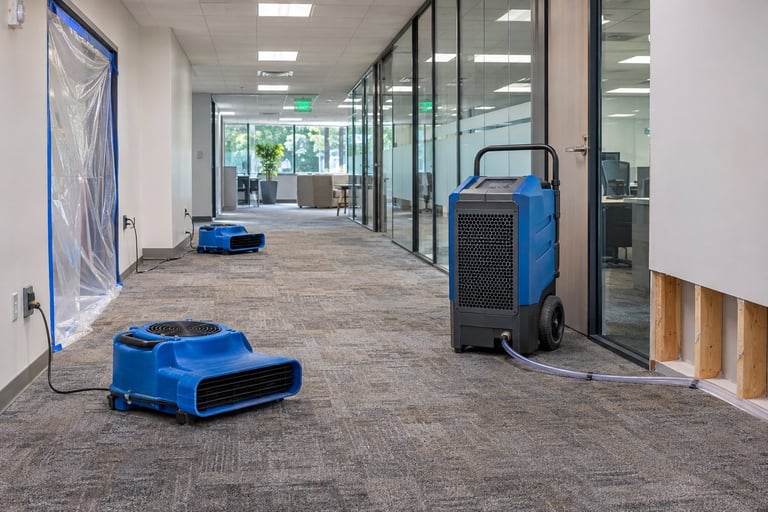
Water damage restoration equipment including blue air movers and dehumidifier in an empty office hallway with glass walls

Our Services

Complete Water Damage Solutions

Extraction through final repairs for commercial and multi-site properties, sequenced around operating hours so the building stays usable where possible. Fire, storm, and other non-water losses are covered on Emergency Facility Repairs & Disaster Recovery.

24/7 Emergency Response

Emergency water calls are accepted around the clock and coordinated to begin extraction and damage assessment as quickly as the trade and location allow.

Professional Water Extraction

Industrial-grade pumps and extraction units remove standing water across small losses and large, multi-area events. Water extraction and sanitary cleanup following water damage are handled as one scope.

Structural Drying

Dehumidification and air movers dry walls, floors, and concealed spaces, with moisture readings tracked until drying targets are met.

Content Restoration

Contents handling is scoped per project: affected items are cleaned, deodorized, and returned where restoration is viable, with on-site processing where included.

Mold Prevention & Remediation

Antimicrobial treatments are applied as part of the drying scope. Where microbial growth is present, remediation is scoped and priced separately.

Drying Sequence

Assess the moisture, then extract, then dry

The order is not optional. Extraction before drying stops the load growing, and readings during drying are what justify pulling equipment out — not a fixed number of days.

Sets the plan
Material types and how much water they hold
Decides release
Recorded readings against dry standards
  1. Moisture assessment

    Map the extent

    Thermal imaging and pin-type meters trace where water has travelled — behind baseboards, under flooring, inside wall cavities and above ceiling tiles. Affected materials are identified by type, and anything that cannot be dried in place is scheduled for removal.

  2. Water extraction

    Remove the standing water

    Truck-mount and portable extraction units pull standing water from carpet, hard flooring and low spots, followed by weighted extraction to lift what is bound in the material. This stage is what keeps the drying load — and the equipment count — from climbing.

  3. Structural drying

    Hold the readings

    Air movers drive evaporation while dehumidifiers take the moisture out of the air. Equipment is placed per the drying plan and repositioned as walls and cavities come down. Readings are logged through the drying period, and equipment comes out when the affected materials reach their dry standard.

Professional Equipment

Industrial-Grade Restoration Technology

Commercial-class drying equipment is selected for the building, the affected materials, and the drying plan, with readings recorded through the drying period.

  • High-velocity air movers for rapid evaporation
  • Desiccant and refrigerant dehumidifiers
  • Thermal imaging cameras detect hidden moisture
  • Hygrometers and moisture meters for monitoring
  • HEPA filtration for air quality during restoration

Emergency Response Available 24/7

Water Damage?
We're Here to Help.

Call AIOS to discuss the affected areas, current conditions, and access requirements. We will coordinate the assessment and next steps with your team.

24/7 Hotline

Calls answered around the clock, every day

Trade Coordination

The right trades identified for the loss and site

Assessment First

Extraction and drying scoped to the moisture found on site