Commercial Concrete Services
New concrete placement and full-depth replacement of failed panels on parking lots, sidewalks and curbs — sequenced around your access routes, deliveries and operating hours, with the cure window agreed before the crew mobilizes.
Scope
Two kinds of work, one sequence. New placement is concrete that does not exist yet — a new pad, a walk added across a lot, curb returned around new islands. Section replacement is concrete that is already there and has failed — we saw-cut it out to a clean line and build the panel back in kind.
Both are full-depth work on parking lots, sidewalks and curbs — new concrete placed to grade, or a failed panel rebuilt in kind. Neither is a surface treatment or an overlay.
Your AIOS contact works the job out with the facility manager directly, so the crew arrives knowing whether they are placing new concrete or taking a failed section out — and how they are getting to it either way.
Whether it is new concrete or a failed section coming out, and the exact panel, bay, curb run or area of lot — walked and marked on site or pinned down from your photos before a cut line or form is set.
Where the saw, skid and truck can get in and park, where spoil and forms are staged, and how the work zone is barricaded and kept separated from traffic.
Work windows agreed with the facility manager around deliveries, peak hours and closures, plus the cure time before the new concrete takes traffic again.
The site address, and where on the property the work is — which lot, which entrance, which run of sidewalk or curb, and whether the area sits on a drive aisle, a fire lane or a pedestrian route.
A wide shot showing the area in context plus a close shot of the damage or of the ground where new concrete is going. Photos let us size the work and flag anything unexpected before a crew is dispatched.
Rough length and width or the number of panels affected. It does not need to be exact — it is what tells us the volume of concrete and whether the job fits a normal work window.
Anything that changes how the crew reaches the section: gated entrances, permit or escort requirements, overhead limits and canopies, tight turns for a truck, no overnight or weekend work, an occupied building on the other side of the sidewalk, or a section that has to stay open for deliveries. Tell us these up front and they get built into the plan rather than found on the day.
The Work Itself
Cut the line, set the form, place and finish the panel. A new pour starts at stage two; a replacement section runs all three. Each stage is a checkpoint you can see happening on site.
Removing to a saw-cut line rather than feathering into the old slab keeps the edge crisp and gives the new panel a defined joint. Because the base is exposed during removal, an unsound subgrade is corrected before anything is poured — which is what the failure was usually telling you about.
Stage 1
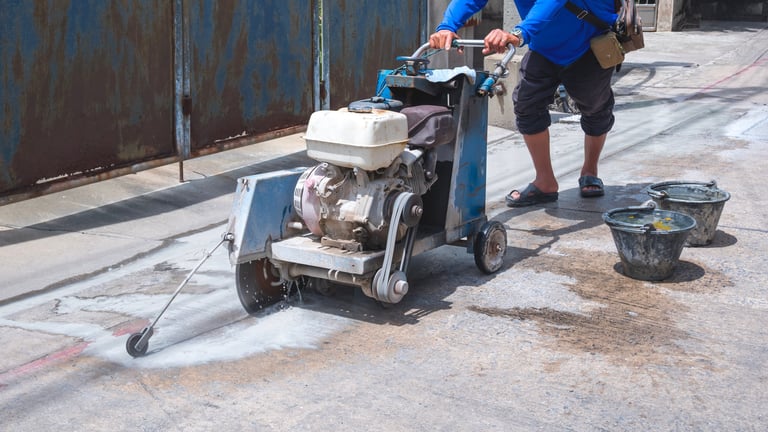
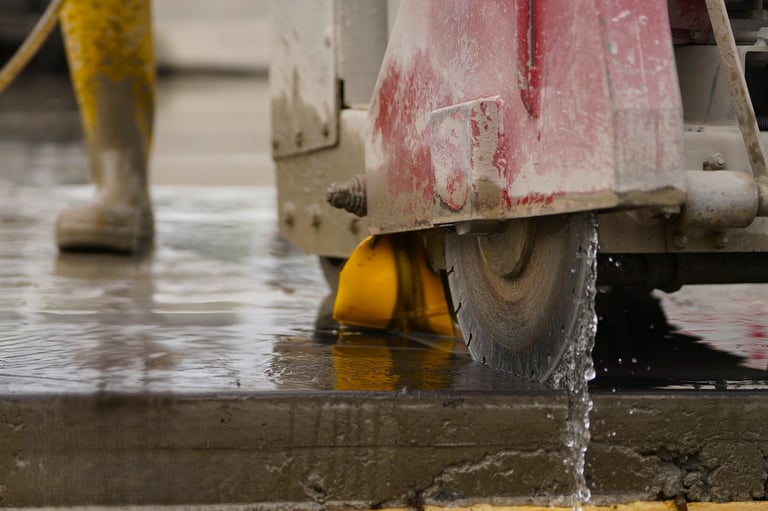
A diamond blade cuts full depth on a fixed line, so the removal has a straight, square edge to build back to.
Stage 2
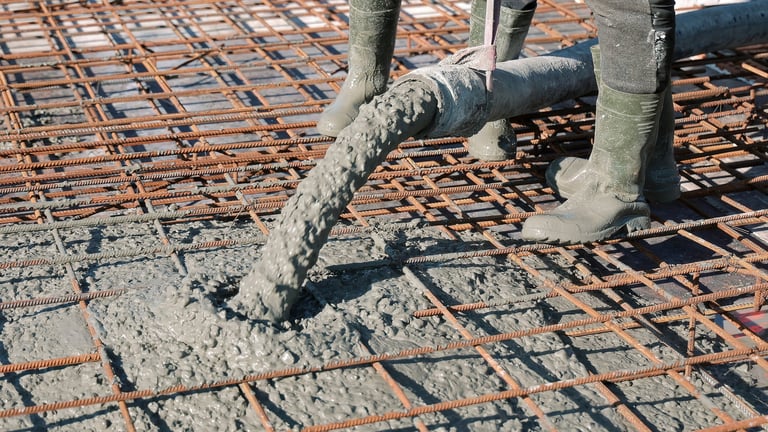
Forms hold the grade and the edge; reinforcement goes in before the concrete is placed and levelled to the adjacent panel.
Stage 3
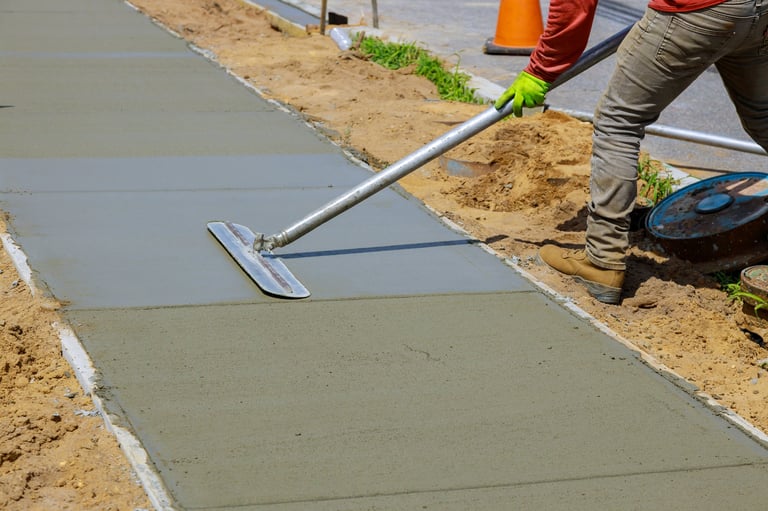
Screed, float and finish matched to the surrounding slab, then cured behind barricades for the agreed window.
Images are illustrative of the methods described. They are licensed stock photographs and do not depict a specific All In One Services project.
Send the location, a few photos, the approximate dimensions and any access constraints — that is enough for us to scope the work, whether that is a new pour or a section cut out and replaced.